"The devil is in the details." — Ludwig Mies van der Rohe
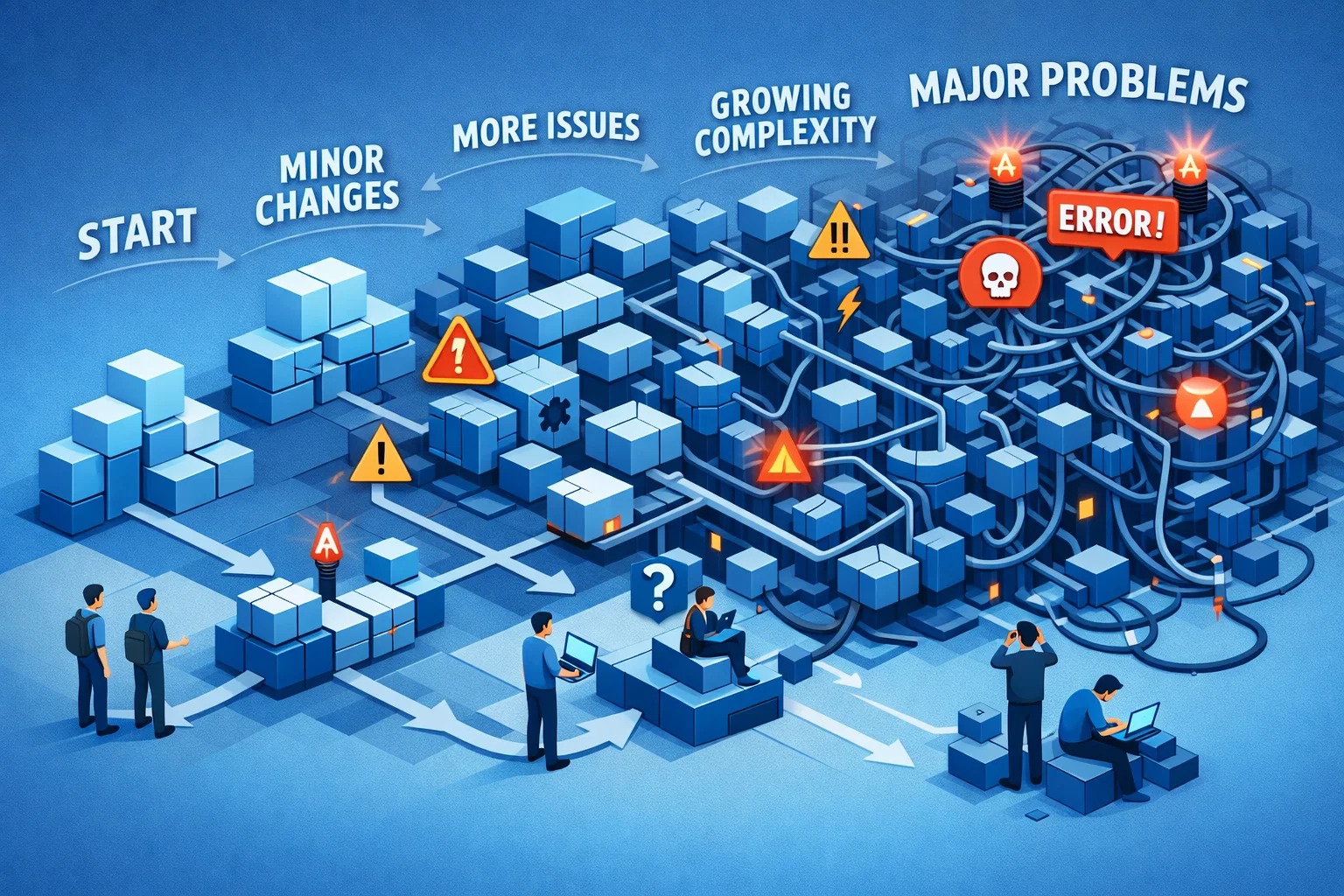
Many large system failures begin not with dramatic mistakes but with minor, seemingly harmless decisions. A quick workaround, a hard-coded value, or a “temporary” structure often becomes permanent over time. These small decisions compound, creating fragile, confusing systems that are expensive to maintain and difficult to scale. Understanding the long-term impact of small technical choices is critical to sustainable development.
Shortcuts Accumulate
Each shortcut adds complexity. One alone may be manageable, but multiple shortcuts form technical debt. Over time, progress slows as developers spend more time navigating problems than delivering solutions. Systems that were once simple become tangled and brittle.
Early Decisions Shape Architecture
Foundational choices — folder structure, data models, naming conventions — influence everything that follows. Poor early decisions restrict flexibility and force awkward workarounds later. Adjusting these foundations becomes costly once features and users depend on them.
Maintenance Suffers First
The first casualty of minor mistakes is maintainability. Bugs take longer to fix, new features take longer to add, and developer confidence erodes. Eventually, teams fear touching fragile parts of the codebase, further slowing progress.
Conclusion
Professional development respects small decisions. Thoughtful choices today prevent bigger problems tomorrow.
Because systems rarely collapse suddenly — they erode quietly.
Next Article (20): Discipline as a Core Skill in Web Development
🧠 Talent fades without structure.
© 2026 Bonnie Computer Hub Team
Published: February 2026
BCH Web Development Academy