"Design is not just what it looks like and feels like. Design is how it works.” – Steve Jobs
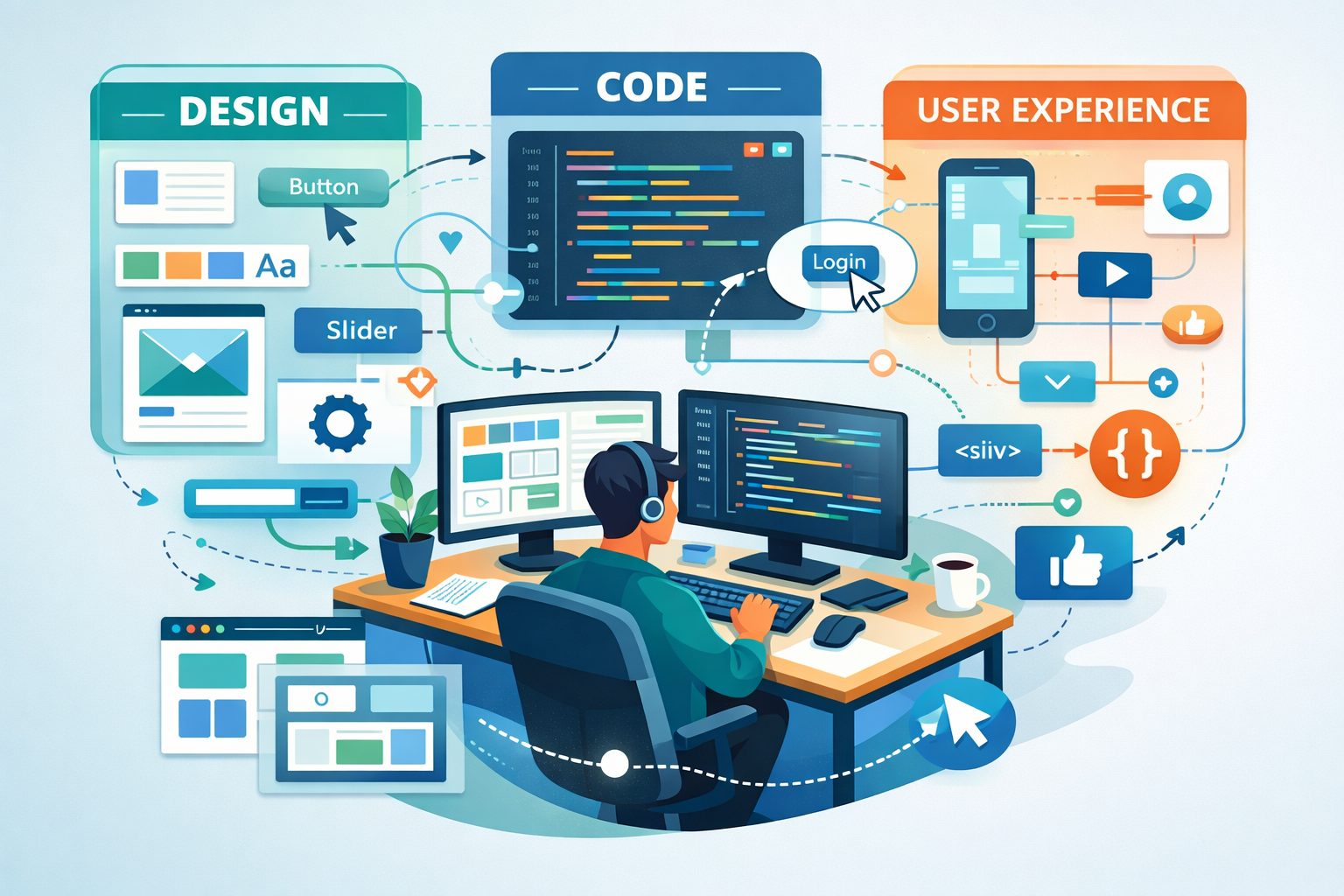
Web development is more than code—it is where design meets functionality and user needs. A visually appealing website that fails to communicate or serve users is no better than a broken machine, while flawless code without thoughtful design can feel cold and unintuitive. According to Don Norman, “Design is really an act of communication,” highlighting that successful web development harmonizes visual design, programming, and user experience. In this article, we explore why these three pillars are inseparable, how they interact to create seamless digital experiences, and why understanding their relationship is critical for modern developers.
Firstly, design guides code. User interface (UI) and experience (UX) design set the blueprint for what developers implement. Wireframes, mockups, and prototypes communicate layout, hierarchy, and interaction patterns. Without clear design, code becomes guesswork, often leading to inconsistent interfaces, frustrating users, or bloated functionality. Research by the Nielsen Norman Group shows that clear, intuitive design directly impacts user satisfaction and engagement. Developers who integrate design early in the process create software that is both efficient and delightful.
Moreover, code brings design to life. While mockups show potential interactions, only code enables dynamic behavior, responsiveness, and interactivity. Languages like HTML, CSS, JavaScript, or frameworks like React and Vue translate design vision into functioning experiences. As Jakob Nielsen notes, even brilliant design fails if the underlying code cannot execute interactions reliably. Recognizing code as the bridge between concept and execution ensures that digital experiences are not just visually appealing but fully functional.
Equally important, user experience is the ultimate test. Both design and code exist to serve users. Usability, accessibility, load performance, and intuitive navigation determine whether a website succeeds in real-world conditions. Research shows that users abandon websites that are confusing or slow, regardless of how beautiful they are. Prioritizing UX principles ensures that design and code work in harmony to meet real needs, not just theoretical specifications.
Furthermore, collaboration between designers and developers enhances quality. Modern web projects rarely involve a single individual; cross-functional teams must communicate, iterate, and align objectives. Tools like Figma, Zeplin, version control, and collaborative project management facilitate this synergy. Teams that respect the interplay between design and code deliver products that scale, adapt, and delight users consistently.
Ultimately, the relationship between design, code, and user experience defines professional web development. Developers who understand how these pillars interact create websites that are reliable, engaging, and user-centered.
Looking ahead, our next article will explore why web development is not just technical but also deeply creative, and how blending logic with imagination produces standout digital experiences.