“Professional is not a label you give yourself—it’s a description you hope others will apply to you.” – David Maister
A professional website is often mistaken for one that simply looks attractive or uses the latest design trends. In reality, professionalism on the web is defined by how well a site performs its purpose, serves its users, and represents the organization behind it. A truly professional website communicates credibility, clarity, and reliability from the first interaction. It reflects intentional design, solid technical foundations, and respect for the user’s time and needs. This article explores the elements that distinguish a professional website from one that merely exists online.
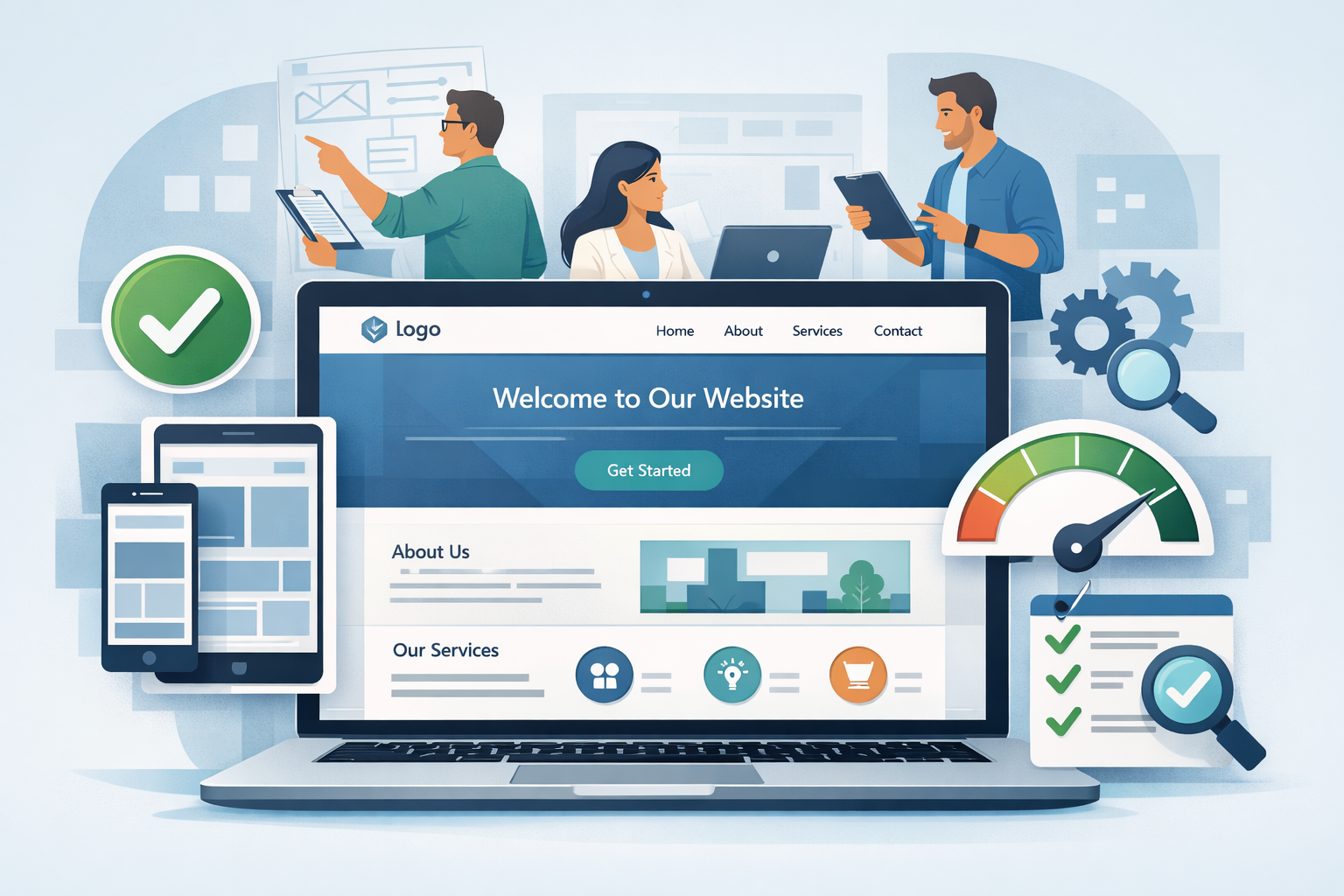
To begin with, clarity and purpose are central to professionalism. A professional website makes it immediately clear who it is for, what it offers, and what the user should do next. Navigation is intuitive, content is well-structured, and messaging is consistent throughout the site. When users struggle to understand a website’s purpose or how to move through it, trust is quickly lost. Professionalism starts with clear communication, not visual complexity.
Moreover, consistency in design and branding plays a critical role. Fonts, colors, spacing, and layout should work together harmoniously across all pages. Inconsistent styling, mismatched visuals, or poorly aligned elements signal carelessness and undermine credibility. Research in digital trust consistently shows that users associate visual consistency with reliability and competence. A professional website feels cohesive, polished, and intentional in every detail.
Equally important, functionality and reliability define professional standards. Broken links, slow load times, non-responsive layouts, and forms that fail to submit are clear indicators of poor quality. A professional website works smoothly across devices and browsers, handling user interactions predictably and securely. Reliability demonstrates that the site has been tested, maintained, and built with real-world usage in mind.
Furthermore, professionalism is reflected in how a website treats its users. Accessibility, readability, and usability are not optional extras—they are fundamental expectations. Professional websites consider users with different devices, screen sizes, abilities, and connection speeds. Clear typography, accessible contrast, responsive layouts, and logical content flow all contribute to an inclusive and respectful user experience.
Ultimately, a professional website is the result of thoughtful planning, disciplined execution, and continuous improvement. It balances design, content, performance, and usability to serve both users and business goals effectively. Professionalism is not declared through aesthetics alone; it is earned through consistency, reliability, and user-centered thinking. When a website reflects care, structure, and purpose, users recognize it—not because the site claims to be professional, but because it genuinely behaves that way.