“Creativity is intelligence having fun.” – Albert Einstein
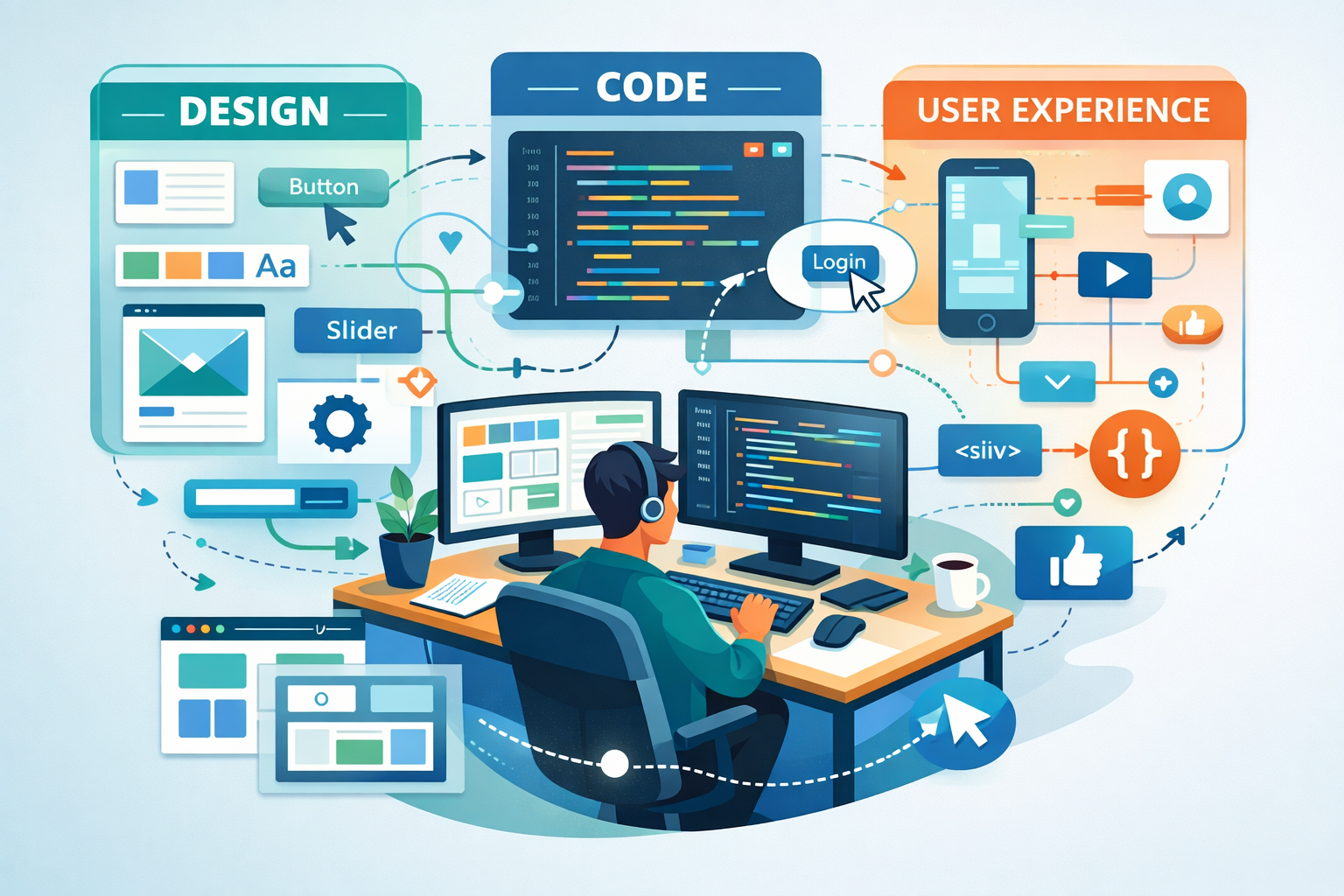
Web development is often perceived as purely technical, a world of algorithms, code syntax, and logic. While technical skills form the backbone of every website or application, creativity is what transforms functional systems into engaging, intuitive, and human-centered digital experiences. Balancing technical precision with creative problem-solving is what distinguishes a competent developer from a professional who builds websites that delight users and solve real problems. In this article, we explore how web development is inherently both technical and creative, why creativity enhances technical work, and how technical mastery empowers creative expression.
To begin with, technical skills provide the foundation for creative execution. Without knowledge of programming languages, frameworks, and system architecture, creative ideas remain theoretical. As Paul Graham, a noted computer scientist, observes, “Code is the medium through which imagination becomes reality.” Mastery of front-end technologies like HTML, CSS, and JavaScript, along with back-end skills in Node.js, PHP, or Python, allows developers to implement creative solutions efficiently and reliably.
Moreover, creativity drives better user experience and design decisions. Even the most technically sound application can fail if users struggle to navigate it or find it unappealing. Research by the Nielsen Norman Group emphasizes that thoughtful visual design, accessible interfaces, and intuitive interactions significantly improve engagement and satisfaction. Developers who apply creative thinking alongside technical execution can anticipate user needs, craft innovative interfaces, and make systems more enjoyable and functional.
Equally important, problem-solving merges technical logic with creative strategies. Real-world web development often requires unconventional solutions to complex challenges. For example, optimizing performance for high-traffic websites or integrating multiple third-party services demands both algorithmic thinking and innovative design. As Donald Norman, a pioneer in user-centered design, notes, “Creativity in design is a form of problem-solving with people in mind.” Developers who blend creativity with technical skill can solve problems that pure logic alone cannot address.
Furthermore, collaboration amplifies both technical and creative strengths. Modern web projects involve designers, developers, product managers, and content creators working in tandem. Creative ideas must be technically feasible, and technical constraints can inspire innovative approaches. Tools like version control, prototyping software, and collaborative platforms enable teams to merge technical precision with creative vision seamlessly. A collaborative mindset ensures that the final product is both robust and aesthetically compelling.
In conclusion, web development is an interplay of technical expertise and creative ingenuity. Each line of code can be an expression of problem-solving artistry, and every design decision can leverage technical knowledge to enhance functionality. Aspiring developers should cultivate both aspects, seeing them as complementary rather than separate.
In the next article, we will explore why process matters in web development, revealing how disciplined workflows turn creative ideas into reliable, maintainable digital systems.